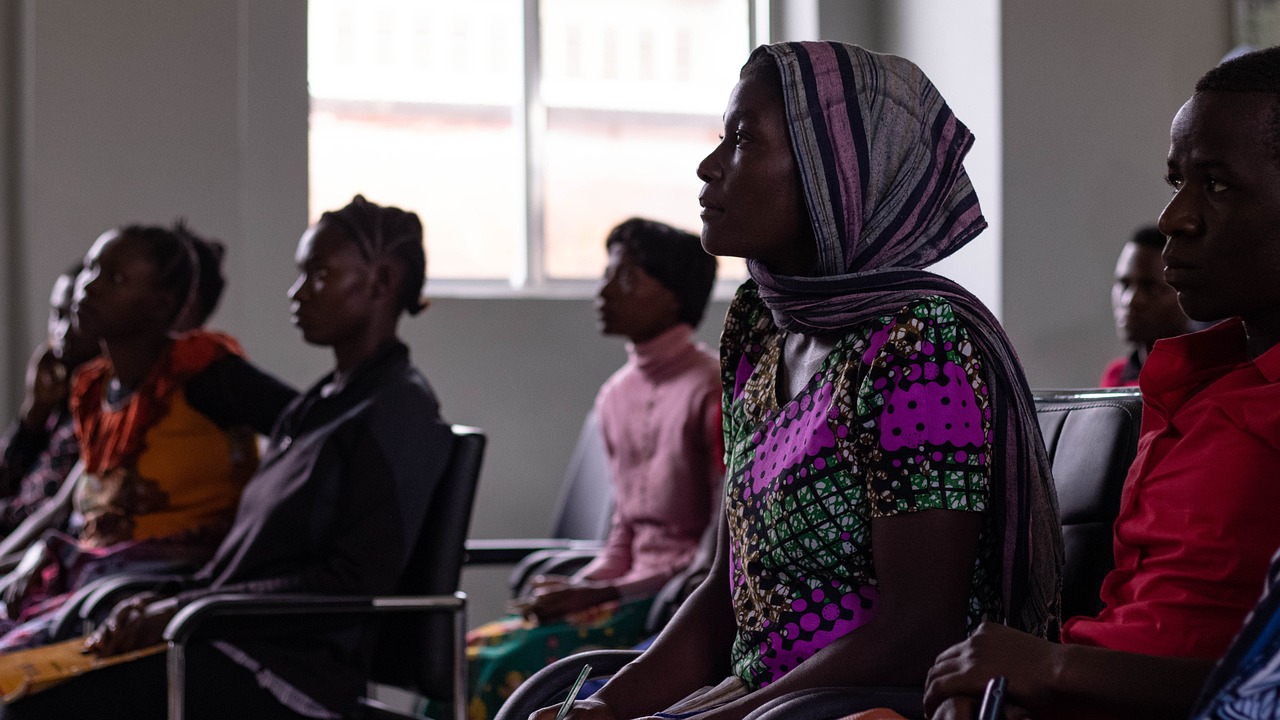
Local governance is evolving beyond traditional top-down models, embracing community voices to shape budgets and priorities that truly reflect citizens’ needs.

Participatory budgeting represents a transformative approach to democracy, enabling residents to directly influence how public funds are allocated in their neighborhoods. This innovative model breaks down barriers between government officials and community members, creating spaces where ordinary citizens become active decision-makers in local governance. As cities worldwide grapple with complex challenges ranging from infrastructure deficits to social inequality, participatory budgeting emerges as a powerful tool for building trust, enhancing transparency, and ensuring that public resources serve those who need them most.
🌍 Understanding Participatory Budgeting: Democracy in Action
Participatory budgeting (PB) is a democratic process where community members directly decide how to allocate portions of municipal or public budgets. Originating in Porto Alegre, Brazil, in 1989, this grassroots innovation has spread to over 11,000 cities across six continents, transforming how governments engage with citizens.
The fundamental premise is simple yet revolutionary: those affected by budgetary decisions should have meaningful input in making them. Rather than limiting civic participation to periodic elections, participatory budgeting creates ongoing dialogue between residents and government institutions. This process typically involves community assemblies, neighborhood meetings, proposal development, voting procedures, and implementation monitoring.
What distinguishes participatory budgeting from traditional consultation mechanisms is the genuine transfer of decision-making power. Citizens don’t merely advise or recommend—they decide. This shift from consultation to co-creation represents a fundamental reimagining of the social contract between governments and governed.
The Mechanics: How Participatory Budgeting Actually Works
While specific implementations vary across contexts, most participatory budgeting processes follow a recognizable structure designed to maximize inclusion and effectiveness. Understanding these operational elements helps communities adapt the model to their unique circumstances.
The cycle typically begins with outreach and education, where municipalities inform residents about available funds and the participation process. This phase is critical for ensuring broad representation, particularly from historically marginalized communities. Governments establish clear parameters: which budget portions are available for participatory allocation, what types of projects qualify, and timelines for the process.
Next comes the ideation phase, where community members propose projects through neighborhood assemblies, online platforms, or dedicated meetings. Residents identify local needs—perhaps a renovated park, improved street lighting, accessibility upgrades, or youth programs. These gatherings become spaces for neighbors to connect, deliberate, and dream collectively about their community’s future.
Following proposal submission, volunteer budget delegates often work with technical staff to assess feasibility, cost proposals accurately, and ensure compliance with regulations. This collaborative refinement ensures that community visions align with practical implementation realities. Technical experts provide guidance without overriding community priorities, striking a balance between professional expertise and resident knowledge.
The voting phase allows all eligible residents to select which projects receive funding. Some municipalities use ranked-choice voting, others simple plurality systems. Increasingly, digital platforms complement in-person voting stations, expanding accessibility while maintaining security and transparency.
Finally, implementation and monitoring ensure approved projects become reality. Many successful PB models include community oversight committees that track progress, hold officials accountable, and report back to residents—closing the feedback loop that builds long-term trust.
💡 Driving Smarter Governance Through Collective Intelligence
Participatory budgeting makes local governance smarter by tapping into distributed knowledge that bureaucracies often miss. Residents possess intimate understanding of neighborhood challenges, nuanced insights into what solutions might work, and lived experience that statistical data cannot capture.
When a parent walking their child to school daily notices dangerous intersections, or when seniors identify barriers to accessing community centers, this granular local knowledge becomes invaluable for evidence-based policymaking. Participatory budgeting channels this collective intelligence into actionable governance improvements.
The process also enhances resource efficiency. Community-identified priorities often align better with actual needs than projects conceived in distant municipal offices. This reduces waste on underutilized infrastructure while directing funds toward interventions with genuine community support and engagement.
Moreover, participatory budgeting fosters civic education. As residents engage with budget documents, cost-benefit analyses, and implementation challenges, they develop sophisticated understanding of governance constraints and possibilities. This informed citizenry makes more realistic demands and offers more constructive criticism—elevating the entire quality of democratic discourse.
Breaking Down Barriers: Inclusive Participation Models
For participatory budgeting to truly empower communities, it must overcome structural barriers that traditionally exclude marginalized voices. Inclusion requires intentional design choices that acknowledge and address power imbalances.
Accessibility considerations span multiple dimensions. Physical accessibility means holding meetings in wheelchair-accessible venues with adequate public transportation. Temporal accessibility involves scheduling sessions at various times to accommodate different work schedules, including evenings and weekends. Linguistic accessibility requires materials and interpretation in community languages.
Digital divides present both challenges and opportunities. While online platforms can expand participation beyond those able to attend in-person meetings, they risk excluding residents without reliable internet access or digital literacy. Hybrid models combining digital and traditional engagement methods prove most effective for maximizing inclusion.
Targeted outreach to underrepresented groups—youth, immigrants, people with disabilities, low-income residents, and communities of color—often requires dedicated resources and culturally competent strategies. Some municipalities reserve delegate positions or budget portions specifically for youth or other constituencies, ensuring diverse perspectives shape outcomes.
Childcare provision, food at meetings, transportation stipends, and compensation for volunteer delegates can remove participation barriers for those with limited resources. These investments in inclusion pay dividends through more representative and legitimate decision-making.
🏙️ Real-World Impact: Stories From Around the Globe
The transformative potential of participatory budgeting becomes concrete when examining its implementation across diverse contexts. These examples illustrate both successes and lessons learned.
In Paris, Mayor Anne Hidalgo allocated €500 million over five years for participatory budgeting beginning in 2014. Over 150,000 Parisians voted on projects ranging from urban gardens to digital fabrication workshops. The process empowered neighborhoods to shape their environments while fostering cross-district solidarity. Notably, Paris extended voting rights to residents as young as 16 and non-citizens, expanding democratic participation beyond traditional boundaries.
New York City operates the largest participatory budgeting process in North America, with over 33 council districts allocating portions of their capital budgets through community votes. Since 2011, more than 300,000 New Yorkers have voted on nearly $300 million in spending. Projects have included school improvements, parks renovations, and street safety upgrades—tangible changes that residents see and use daily, reinforcing the connection between participation and outcomes.
In rural Scotland, participatory budgeting adapted to sparsely populated areas through innovative approaches like mobile voting stations and online deliberation platforms. These adaptations demonstrate that participatory budgeting isn’t exclusively urban—it can strengthen democracy in diverse geographic and demographic contexts when thoughtfully implemented.
Porto Alegre’s pioneering experience offers long-term insights. Over three decades, participatory budgeting there correlated with significant improvements in infrastructure, sanitation coverage, housing, and education access, particularly in previously neglected poor neighborhoods. This sustained implementation demonstrates that participatory budgeting can drive measurable quality-of-life improvements when institutionally embedded.
Technology as Enabler: Digital Tools for Democratic Participation
Digital platforms increasingly facilitate participatory budgeting, reducing transaction costs and expanding accessibility. These technologies range from simple online voting systems to sophisticated civic engagement applications that enable proposal development, discussion, and monitoring.
Several platforms have emerged specifically designed for participatory budgeting. These tools typically include features for project submission, community discussion forums, transparent cost information, mapping visualizations, voting mechanisms, and implementation tracking dashboards. By consolidating these functions, technology lowers barriers to participation while improving process transparency.
Mobile applications bring participatory budgeting to smartphones, meeting residents where they already are. Push notifications remind citizens about voting deadlines, while geotagged project proposals help residents visualize how initiatives would affect their neighborhoods. This convenience particularly appeals to younger generations accustomed to digital civic engagement.
However, technology is a tool, not a solution. The most successful digital participatory budgeting initiatives complement rather than replace face-to-face community building. Screens cannot fully substitute for the relationship-building and trust-formation that emerge from in-person deliberation. Hybrid models leveraging both digital convenience and human connection prove most robust.
Data visualization tools make budget information more comprehensible. Interactive graphics, infographics, and simplified budget presentations demystify complex financial documents, enabling residents without technical expertise to engage meaningfully with fiscal information. Transparency becomes actionable when information is truly accessible.
📊 Measuring Success: Evaluating Participatory Budgeting Outcomes
Rigorous evaluation helps municipalities understand whether participatory budgeting delivers on its promises and how processes might improve. Assessment frameworks typically examine multiple dimensions of impact.
Participation metrics track how many residents engage, demographic representativeness, and whether participation increases over time. High participation doesn’t automatically equal success, but sustained engagement suggests perceived legitimacy and value. Demographic analysis reveals whether outreach effectively reaches marginalized communities or if barriers persist.
Project implementation rates measure government responsiveness. When approved projects languish unbuilt, residents lose faith in the process. High completion rates conversely demonstrate that participation translates into tangible results, building trust and encouraging future engagement.
Social capital indicators assess whether participatory budgeting strengthens community bonds. Surveys measuring trust in government, sense of empowerment, neighborhood cohesion, and civic knowledge provide insights into participatory budgeting’s broader democratic effects beyond immediate budget allocations.
Qualitative research captures nuanced impacts that statistics miss. Interviews with participants reveal how engagement transformed their understanding of governance, connected them with neighbors, or gave voice to previously unheard concerns. These stories humanize abstract democratic benefits.
Cost-benefit analyses examine whether participatory budgeting’s administrative costs yield proportional returns through improved resource allocation, reduced implementation conflicts, and enhanced community ownership of public investments. While difficult to quantify precisely, these assessments inform resource allocation decisions.
Overcoming Challenges: Obstacles to Effective Implementation
Despite its promise, participatory budgeting faces significant implementation challenges that municipalities must navigate thoughtfully to realize the model’s full potential.
Participation inequality remains persistent. Even well-designed processes often overrepresent more educated, higher-income residents with time and capacity for civic engagement. Overcoming this requires sustained, well-resourced outreach and barrier reduction—commitments that strain limited municipal budgets.
Scale limitations constrain impact when participatory budgeting allocates only tiny budget fractions. If residents can influence merely 1-2% of expenditures while major decisions remain unchanged, the process risks becoming tokenistic rather than transformative. Meaningful participation requires meaningful resources.
Technical complexity can overwhelm residents unfamiliar with budget processes, zoning regulations, or project feasibility assessment. Overly complicated procedures discourage participation. Successful models balance technical rigor with accessibility through skilled facilitation and translation of bureaucratic language into plain speech.
Political resistance from elected officials or bureaucrats unwilling to share power represents perhaps the deepest obstacle. When leadership views participatory budgeting as a threat rather than complement to representative democracy, half-hearted implementation undermines effectiveness. Cultivating political champions and demonstrating benefits helps overcome institutional resistance.
Sustainability challenges emerge when participatory budgeting depends on individual champions rather than institutional embedding. Leadership changes can derail processes lacking formal ordinances, dedicated staff, and budget lines. Institutionalization ensures continuity beyond any single administration.
🚀 The Future of Participatory Governance
Participatory budgeting represents one element of broader participatory governance trends reshaping democracy for the 21st century. Its evolution offers glimpses into more responsive, inclusive political futures.
Integration with other civic technologies creates ecosystems for continuous engagement. Participatory budgeting platforms increasingly connect with city service request systems, planning processes, and performance dashboards—enabling citizens to follow issues from identification through resolution. This systemic integration embeds participation into governance routines rather than treating it as a special event.
Youth engagement innovations recognize young people as legitimate governance stakeholders. Youth-specific participatory budgeting processes, sometimes starting with students as young as elementary age, cultivate civic habits early while incorporating youth perspectives into community decisions affecting their futures.
Climate-focused participatory budgeting directs community decision-making toward sustainability projects. As municipalities confront climate adaptation and mitigation challenges, involving residents in green infrastructure investments builds support for necessary transitions while ensuring equity considerations shape climate responses.
Regional and national scaling experiments test whether participatory budgeting principles can function beyond local contexts. While most implementations remain municipal, some regions and even national governments pilot participatory processes for larger budget allocations, potentially democratizing governance at multiple scales.
Artificial intelligence and machine learning applications promise enhanced matching between community needs and project proposals, improved feasibility assessment, and automated progress tracking. However, these technologies must augment rather than replace human deliberation, maintaining the fundamentally social character of democratic participation.
Building Capacity: Training and Support for Implementation
Successful participatory budgeting requires skilled practitioners who can navigate complex facilitation, technical, and political challenges. Capacity building investments pay long-term dividends through more effective implementation.
Municipal staff training helps public servants embrace new roles as facilitators rather than gatekeepers. This cultural shift challenges traditional bureaucratic habits, requiring learning in deliberative techniques, conflict resolution, plain language communication, and community organizing. Professional development programs specifically addressing participatory governance skills remain underdeveloped but increasingly necessary.
Community leadership development ensures residents possess skills to effectively participate, propose projects, and monitor implementation. Workshops on budget literacy, project planning, public speaking, and advocacy empower citizens to engage confidently and effectively. This investment in civic infrastructure strengthens democracy broadly, with benefits extending beyond participatory budgeting.
Peer learning networks connect practitioners across jurisdictions to share experiences, troubleshoot challenges, and disseminate innovations. National and international participatory budgeting associations facilitate knowledge exchange, develop best practice guidelines, and provide mentoring for municipalities initiating processes.
Academic partnerships contribute research, evaluation expertise, and documentation that builds the evidence base for participatory budgeting. University collaborations can offset municipalities’ limited capacity for systematic assessment while training students in engaged scholarship that serves communities.

✨ Reimagining Democracy From the Ground Up
Participatory budgeting ultimately represents more than a technical governance innovation—it embodies a democratic philosophy recognizing ordinary people’s capacity for collective self-determination. In an era of declining trust in institutions and political polarization, it offers pathways toward renewed civic engagement and social solidarity.
The model’s spread across vastly different political, economic, and cultural contexts demonstrates universal appeal of inclusive decision-making. Whether in wealthy European cities or developing-world communities, residents respond positively to genuine opportunities to shape their environments and futures. This commonality suggests deep human desires for agency, recognition, and belonging that participatory budgeting can help fulfill.
By creating spaces for deliberation across difference, participatory budgeting builds democratic muscles atrophied by polarization and isolation. Neighbors discover shared concerns transcending partisan divides. Deliberation skills developed through participatory budgeting transfer to other civic contexts, gradually strengthening democratic culture.
The process makes power visible and contestable. When residents see precisely how public funds are allocated and participate in those decisions, abstract governance becomes concrete and changeable. This demystification combats cynicism by demonstrating that collective action can produce tangible improvements.
As municipalities worldwide confront unprecedented challenges—from climate change to inequality to technological disruption—the collective intelligence, legitimacy, and community ownership that participatory budgeting generates become increasingly valuable. Top-down governance alone cannot address complex, interconnected problems requiring community buy-in and localized solutions. Participatory approaches offer necessary complements to representative democracy, not replacements for it.
The path forward involves continued experimentation, rigorous evaluation, and institutional commitment to sharing power. Participatory budgeting will evolve, incorporating new technologies and adapting to changing contexts while maintaining core principles of inclusion, deliberation, transparency, and accountability. Its ultimate success depends on sustained political will to embrace democracy as a living practice requiring constant renewal through active citizen participation. In this renewal lies hope for more just, responsive, and resilient communities capable of navigating uncertain futures together.