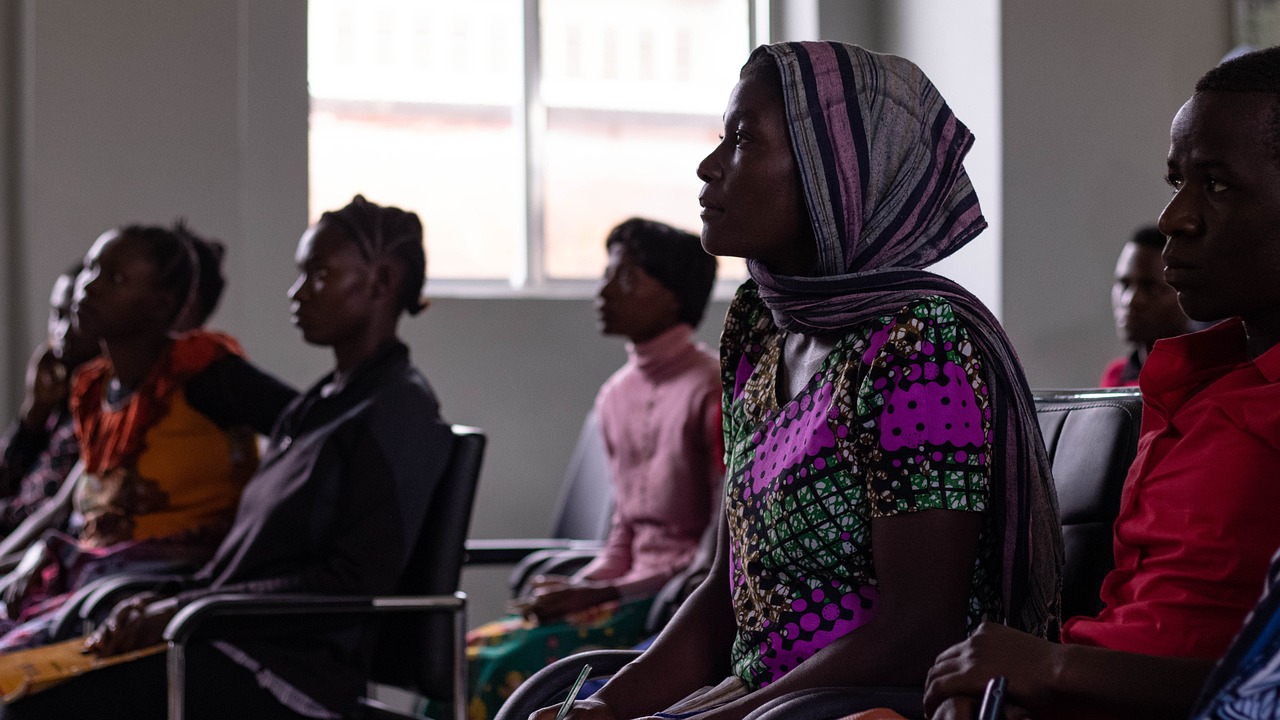
Climate change is no longer a distant threat but a present reality affecting millions worldwide. Vulnerable communities face unprecedented challenges as extreme weather events, rising sea levels, and shifting environmental patterns reshape their daily lives and threaten their very existence.

The urgency of developing effective climate adaptation strategies has never been more critical. From coastal villages disappearing beneath rising waters to agricultural communities battling prolonged droughts, the impacts of climate change disproportionately affect those least equipped to respond. Building resilience through innovative approaches has become essential for protecting these at-risk populations and ensuring their sustainable future in an increasingly unpredictable world.
🌍 Understanding Vulnerability in the Climate Crisis
Vulnerability to climate change extends far beyond geographic location. It encompasses economic capacity, social infrastructure, access to resources, and institutional support systems. Communities labeled as “vulnerable” typically share common characteristics that amplify their exposure to climate risks while limiting their adaptive capacity.
Low-income populations in developing nations often occupy the most precarious positions. These communities frequently inhabit flood-prone areas, arid regions susceptible to desertification, or coastal zones threatened by sea-level rise. Their limited financial resources restrict access to protective infrastructure, early warning systems, and recovery mechanisms when disasters strike.
Indigenous populations represent another critically vulnerable group. Despite possessing invaluable traditional ecological knowledge, these communities often lack political representation and land rights. Their deep connection to specific territories makes displacement particularly devastating, destroying not just homes but entire cultural identities and knowledge systems developed over millennia.
The Intersectionality of Climate Vulnerability
Climate vulnerability intersects with existing social inequalities. Gender disparities become pronounced during climate crises, as women in many societies bear primary responsibility for water collection, food preparation, and family care. When resources become scarce, these burdens intensify disproportionately.
Children and elderly populations face heightened risks during extreme weather events. Heat waves prove particularly deadly for seniors with limited mobility, while children suffer long-term developmental impacts from malnutrition caused by climate-induced food insecurity.
🔧 Innovative Infrastructure Solutions for Climate Resilience
Modern climate adaptation requires reimagining how we design and build infrastructure. Traditional approaches often fail to address the dynamic nature of climate risks, making innovation essential for long-term resilience.
Green infrastructure has emerged as a powerful adaptation tool. Unlike conventional gray infrastructure, green solutions work with natural systems to provide protection while delivering multiple co-benefits. Urban forests reduce heat island effects while absorbing stormwater. Constructed wetlands filter pollutants while providing flood protection. Permeable pavements allow water infiltration, reducing flood risks in densely populated areas.
Floating Architecture and Amphibious Housing
Communities in flood-prone regions are pioneering floating architecture solutions. The Netherlands has long led this field, but innovations now spread globally. Floating homes rise and fall with water levels, eliminating flood damage risks. Vietnam’s Mekong Delta has embraced floating schools and markets, maintaining community functions despite regular flooding.
Amphibious housing represents another breakthrough. These structures rest on solid ground during normal conditions but float on buoyant foundations when floodwaters rise. This approach proves particularly valuable in areas where complete relocation isn’t feasible, allowing communities to maintain their geographic roots while adapting to new hydrological realities.
Smart Water Management Systems
Water scarcity and flooding—seemingly opposite problems—often plague the same regions during different seasons. Innovative water management systems address both challenges simultaneously through intelligent design and technology integration.
Rainwater harvesting systems capture and store precipitation for use during dry periods. In urban settings, these systems reduce stormwater runoff while providing supplementary water supplies. Rural communities implement community-scale harvesting projects, creating shared water reserves that buffer against drought.
Fog harvesting offers solutions in arid coastal regions where fog is common but rainfall scarce. Large mesh nets capture water droplets from fog, channeling them into storage systems. This low-tech, low-cost approach has transformed water access in parts of Chile, Morocco, and Peru.
🌾 Agricultural Adaptation and Food Security Strategies
Agriculture faces existential threats from climate change, yet food production must increase to feed growing populations. This paradox demands revolutionary approaches to farming that enhance resilience while maintaining productivity.
Climate-smart agriculture integrates multiple strategies to build resilience. Crop diversification reduces vulnerability to single crop failures. Farmers plant varieties with different drought tolerances, pest resistances, and growing seasons, ensuring some harvest regardless of conditions. This approach also improves soil health and biodiversity, creating more robust agricultural ecosystems.
Agroforestry and Regenerative Practices
Agroforestry systems combine trees with crops or livestock, creating diverse, resilient production systems. Trees provide shade, reduce soil erosion, improve water retention, and create microclimates that buffer temperature extremes. In East Africa, farmers integrating trees into croplands report improved yields even during drought years.
Regenerative agriculture goes beyond sustainability to actively restore degraded lands. Techniques include minimal soil disturbance, permanent soil cover, diverse crop rotations, and integrated livestock management. These practices rebuild soil organic matter, increasing carbon storage while improving water retention and nutrient availability.
Drought-Resistant Crops and Traditional Varieties
Scientific research increasingly validates traditional crop varieties that indigenous communities have cultivated for generations. These heritage crops often possess genetic traits that confer resilience to environmental stresses. Millets, quinoa, and sorghum withstand drought better than wheat or rice, offering valuable alternatives as climate patterns shift.
Modern biotechnology also contributes through developing crop varieties with enhanced climate resilience. However, these innovations work best when combined with traditional knowledge rather than replacing it entirely. The most successful approaches blend scientific advances with time-tested agricultural wisdom.
📱 Technology-Enabled Early Warning and Response Systems
Early warning systems save lives and reduce economic losses from climate disasters. Modern technology dramatically enhances the speed, accuracy, and reach of these critical systems, particularly in previously underserved regions.
Mobile phone penetration in developing nations enables unprecedented access to early warning information. SMS-based alert systems notify communities of approaching storms, floods, or heat waves, providing time for preparation and evacuation. These systems prove especially valuable in areas lacking other communication infrastructure.
Satellite Monitoring and Predictive Analytics
Satellite technology revolutionizes climate monitoring in remote and vulnerable regions. Real-time data on rainfall, vegetation health, sea surface temperatures, and glacier melt inform both immediate responses and long-term planning. Machine learning algorithms analyze this data to predict climate events with increasing accuracy.
Drought early warning systems use satellite vegetation indices to detect emerging food security crises months before harvest failures become apparent on the ground. This lead time enables interventions that prevent famines rather than merely responding to them.
Community-Based Monitoring Networks
Technology works best when combined with community participation. Citizen science initiatives train local residents to collect climate data using simple tools or smartphone apps. This grassroots monitoring generates hyperlocal information that satellites might miss while building community capacity and engagement.
Indigenous weather knowledge contributes valuable insights to modern forecasting systems. Many indigenous communities possess sophisticated understanding of environmental indicators—animal behaviors, plant phenology, atmospheric conditions—that signal coming weather changes. Integrating this traditional knowledge with technological systems improves prediction accuracy while respecting cultural expertise.
💰 Financial Innovation for Climate Resilience
Building resilience requires substantial investment, yet vulnerable communities often lack financial resources. Innovative financing mechanisms help bridge this gap, making adaptation accessible to those who need it most.
Microinsurance provides affordable coverage against climate risks for low-income households. Index-based insurance pays out automatically when predetermined triggers occur—such as rainfall below specific thresholds or temperatures above dangerous levels—eliminating lengthy claim processes. This approach proves particularly effective for smallholder farmers who cannot afford traditional insurance premiums.
Climate Adaptation Funds and Green Bonds
International climate adaptation funds channel resources from wealthy nations to vulnerable regions. The Green Climate Fund, Adaptation Fund, and similar mechanisms finance projects ranging from coastal protection to water infrastructure. However, accessing these funds often requires technical capacity that vulnerable communities lack, highlighting the need for simplified application processes and capacity building.
Green bonds represent another financing avenue. These instruments raise capital specifically for environmental projects, including climate adaptation initiatives. Municipal governments increasingly issue resilience bonds to fund flood protection, heat mitigation, and other adaptation infrastructure.
Community-Based Savings and Risk Pooling
Local-level financial mechanisms empower communities to build resilience without external dependence. Village savings and loan associations create community-controlled capital that members can access for adaptation investments. Risk pooling arrangements distribute climate impacts across groups rather than individual households bearing full losses.
Remittances from diaspora communities provide another crucial resource. Climate migrants who relocate often send money to families in vulnerable home regions. Facilitating these transfers and encouraging their use for resilience investments amplifies their adaptation benefits.
🏘️ Ecosystem-Based Adaptation Approaches
Nature itself offers powerful climate adaptation solutions. Ecosystem-based adaptation harnesses natural processes to protect communities while providing environmental co-benefits that conventional infrastructure cannot match.
Mangrove restoration protects coastal communities from storm surges and erosion while creating fish nurseries that support food security and livelihoods. These tidal forests absorb wave energy more effectively than concrete seawalls while adapting naturally to rising sea levels. Communities throughout Southeast Asia, East Africa, and Latin America are investing in mangrove conservation as frontline climate defense.
Coral Reef Restoration and Protection
Healthy coral reefs reduce wave energy by up to 97%, protecting coastal communities from storms and erosion. Yet climate change threatens these ecosystems through bleaching and acidification. Innovative restoration techniques—including coral gardening, assisted evolution, and artificial reef structures—help rebuild these natural barriers while supporting marine biodiversity and fishing communities.
Watershed Protection and Reforestation
Upstream forest conservation protects downstream communities from floods and landslides while regulating water supplies. Payment for ecosystem services programs compensate upstream landholders for maintaining forests, creating economic incentives for conservation. These arrangements benefit both providers and beneficiaries of ecosystem services while building landscape-scale resilience.
Urban tree planting reduces heat island effects, improves air quality, manages stormwater, and enhances mental health. Strategic placement of urban forests in vulnerable neighborhoods provides disproportionate benefits to those most affected by climate extremes. Cities worldwide are recognizing urban nature as essential climate adaptation infrastructure.
🤝 Governance, Participation, and Social Resilience
Physical infrastructure and technological systems alone cannot build resilience. Social cohesion, inclusive governance, and community participation form the foundation upon which successful adaptation rests.
Participatory planning processes ensure adaptation strategies address actual community priorities rather than external assumptions. When vulnerable populations help design resilience initiatives, projects better reflect local knowledge, cultural contexts, and genuine needs. This ownership also increases implementation success and long-term sustainability.
Strengthening Local Institutions
Local governments and community organizations serve as critical adaptation intermediaries. Strengthening their capacity to assess risks, access resources, and coordinate responses multiplies adaptation effectiveness. Training programs, technical assistance, and institutional development investments yield long-term dividends in community resilience.
Traditional governance structures often possess valuable adaptive capacity. Many indigenous communities have governance systems specifically designed to manage environmental resources sustainably across generations. Supporting rather than replacing these institutions respects cultural autonomy while leveraging time-tested resilience mechanisms.
Education and Capacity Building
Climate literacy empowers communities to understand risks and implement solutions. Educational programs ranging from school curricula to adult learning initiatives build the knowledge base necessary for effective adaptation. Practical training in specific skills—such as climate-smart farming techniques, early warning system use, or green infrastructure maintenance—translates knowledge into action.
Women’s education deserves particular emphasis. Educated women better protect their families during climate emergencies, adopt sustainable practices more readily, and participate more effectively in community decision-making. Gender-responsive education initiatives amplify adaptation benefits throughout communities.
🌟 Scaling Success Through Knowledge Exchange
Successful adaptation innovations must spread rapidly to benefit vulnerable communities worldwide. Knowledge exchange mechanisms facilitate this diffusion while respecting local contexts that require adaptation rather than direct replication.
South-South cooperation enables knowledge sharing between developing nations facing similar climate challenges. Communities in Bangladesh share cyclone preparedness strategies with coastal East Africa. Pacific island nations exchange experiences on sea-level rise adaptation. These exchanges often prove more relevant than North-South knowledge transfer because contexts more closely align.
Digital Platforms and Learning Networks
Online platforms connect practitioners across geographic boundaries, enabling real-time knowledge exchange. Documentation of adaptation case studies, best practices, and lessons learned creates resources that others can access and adapt. Video documentation proves particularly effective, showing adaptation techniques in action more clearly than written descriptions alone.
Learning networks bring together communities, researchers, practitioners, and policymakers around shared adaptation challenges. These networks facilitate ongoing dialogue, collaborative problem-solving, and collective innovation that accelerates resilience building beyond what any single actor could achieve independently.

🚀 Moving Forward With Integrated Resilience Strategies
Building climate resilience in vulnerable communities demands integrated approaches that combine infrastructure, technology, ecosystem services, financial mechanisms, and social strengthening. No single solution suffices; successful adaptation requires tailored combinations responding to specific contexts while remaining flexible enough to adjust as conditions evolve.
The most promising strategies share common elements: they embrace innovation while respecting traditional knowledge, prioritize community participation, address underlying vulnerabilities beyond immediate climate impacts, and generate multiple benefits beyond climate adaptation alone. These integrated approaches build not just climate resilience but broader wellbeing and development.
Urgency must be balanced with careful implementation. The pressure to act quickly cannot excuse poorly designed interventions that ignore community needs or create new vulnerabilities. Thoughtful, participatory processes that engage vulnerable populations as active partners rather than passive beneficiaries yield more effective, equitable, and sustainable resilience.
International solidarity remains essential. Wealthy nations that contributed most to climate change bear responsibility to support adaptation in vulnerable regions. This support must flow through mechanisms that respect recipient agency, build local capacity, and provide predictable, adequate, long-term resources. Climate justice demands nothing less.
The climate challenge confronting vulnerable communities is immense, but human ingenuity, cooperation, and determination offer genuine hope. From floating schools in Vietnam to mangrove restoration in Kenya, from drought-resistant crops in India to participatory planning in Peru, communities worldwide are demonstrating that resilience is possible. Scaling these successes while fostering continued innovation can protect millions from climate impacts while creating more just, sustainable, and resilient societies for all. The work is urgent, the stakes are high, but the path forward exists—we must walk it together with courage and commitment. 🌱