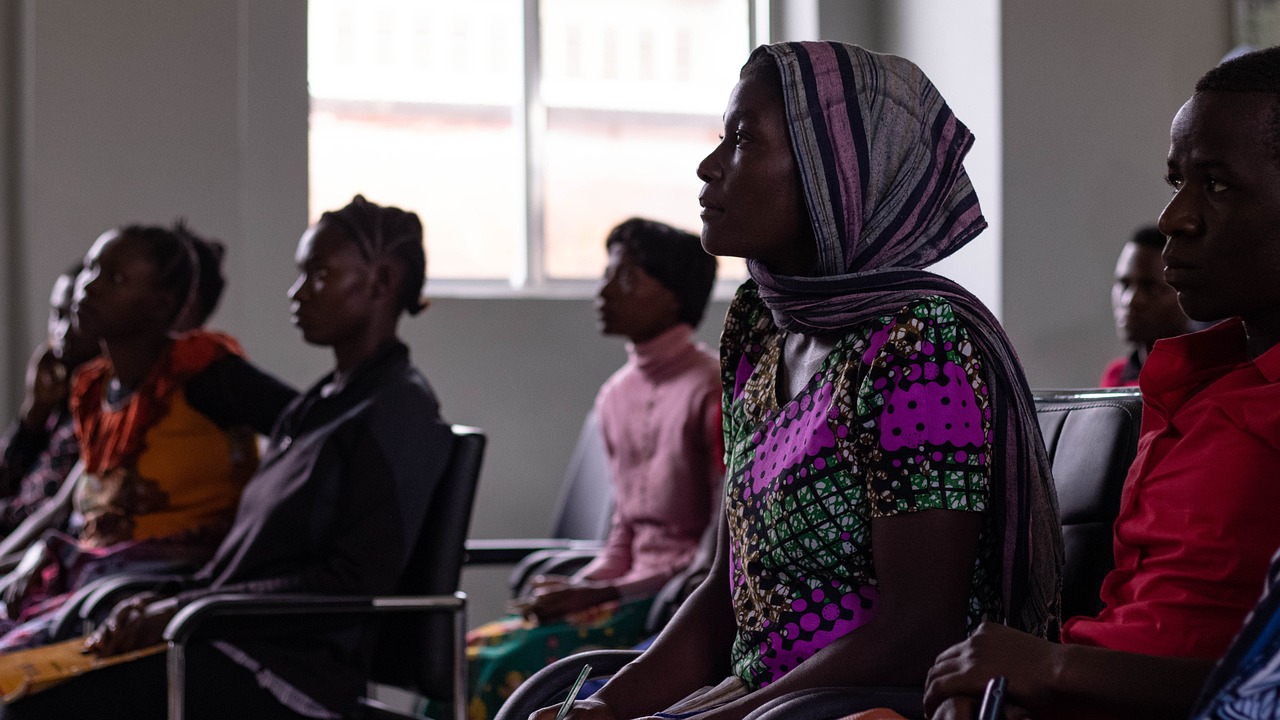
In villages across the globe, millions of people remain excluded from traditional banking systems, yet they possess the entrepreneurial spirit and determination to lift themselves out of poverty. Microfinance and shared savings schemes have emerged as powerful tools that bridge this financial gap, creating pathways to prosperity that were previously unimaginable.

These community-based financial mechanisms are not merely about lending money—they represent a fundamental shift in how economic development occurs at the grassroots level. By placing financial control directly in the hands of village residents, these programs foster self-reliance, build social capital, and create sustainable economic ecosystems that benefit entire communities for generations to come.
💰 Understanding Village Microfinance: More Than Just Small Loans
Microfinance in rural settings operates on principles fundamentally different from conventional banking. These institutions recognize that poverty is not caused by laziness or lack of ambition, but by systemic barriers to capital access. Village microfinance schemes typically offer small loans—sometimes as little as $50—to individuals who lack collateral, credit history, or even basic identification documents that traditional banks require.
The beauty of village microfinance lies in its adaptability. Loan officers understand local economic cycles, seasonal income fluctuations, and community dynamics. A farmer might receive funds before planting season and repay after harvest. A woman starting a small textile business can access capital without proving years of business experience. This flexibility transforms microfinance from a financial product into a true empowerment tool.
Repayment rates in well-managed microfinance programs often exceed 95%, challenging the myth that poor people are credit risks. The secret lies in community-based accountability systems where borrowers form groups that provide mutual support and gentle peer pressure to honor commitments. This social collateral proves more effective than traditional financial guarantees.
🤝 The Power of Shared Savings: Building Wealth Together
While microfinance brings external capital into communities, shared savings schemes harness the collective financial power already present within villages. These programs, often called Village Savings and Loan Associations (VSLAs) or Self-Help Groups (SHGs), enable members to pool small regular contributions into a common fund from which they can borrow.
The mechanics are elegantly simple yet profoundly effective. Groups of 15-30 members meet regularly—often weekly—to make small deposits. These funds are then available for members to borrow at interest rates determined by the group. All interest earned returns to members as dividends, ensuring wealth circulates within the community rather than flowing to external institutions.
Shared savings schemes cultivate financial discipline and literacy. Members learn to budget, save consistently, and understand interest calculations. Women, who comprise the majority of participants in most programs, gain confidence in handling money and making financial decisions—skills that extend far beyond the savings group into household and business management.
The Psychological Transformation of Saving
Perhaps the most underestimated benefit of shared savings is psychological. Many rural poor have internalized the belief that saving is impossible on minimal incomes. When they successfully accumulate funds—even small amounts—through disciplined weekly contributions, this fundamentally reshapes their self-perception. They begin to see themselves not as perpetually poor, but as savers, investors, and future-oriented planners.
This mindset shift radiates through families. Children observe parents saving and planning, learning financial responsibility by example. The transformation from survival-mode thinking to future-oriented planning represents a crucial step toward breaking intergenerational poverty cycles.
📊 Measuring Impact: How Lives Actually Change
The transformative power of village microfinance and shared savings becomes clear when examining concrete outcomes across diverse communities:
- Income Generation: Studies consistently show household income increases of 20-35% within two years of program participation, with women-led enterprises showing particularly strong growth.
- Asset Accumulation: Families acquire productive assets—livestock, tools, inventory—that generate ongoing income rather than one-time consumption.
- Education Investment: School enrollment and retention rates improve significantly as families can afford fees, uniforms, and materials without crisis.
- Health Access: Medical expenses become manageable through savings or emergency loans, reducing the devastating impact of health shocks on family finances.
- Housing Improvements: Families progressively upgrade homes with more durable materials, improving health and safety while building equity.
- Food Security: Seasonal hunger—the “lean season” before harvests—diminishes as families maintain savings buffers and diversify income sources.
These improvements are not isolated—they reinforce each other in positive cycles. Better nutrition improves children’s school performance. Education opens employment opportunities. Stable income enables consistent saving. Each gain makes the next more achievable.
🌾 Agricultural Communities: Financing the Growing Season
For farming villages, microfinance addresses one of agriculture’s fundamental challenges: the mismatch between when expenses occur and when income arrives. Farmers need capital for seeds, fertilizer, and labor months before harvest revenues materialize. Without access to affordable credit, they either plant suboptimal crops or fall into debt traps with informal moneylenders charging predatory rates.
Village microfinance schemes tailored for agricultural communities offer loans synchronized with growing cycles. A coffee farmer in Uganda might receive a loan in February for the upcoming season, with repayment scheduled after the October harvest. This alignment with agricultural reality makes the difference between subsistence farming and profitable cultivation.
Beyond individual loans, some programs finance collective agricultural investments. A group might jointly purchase a irrigation pump, processing equipment, or storage facility that no single member could afford. These shared assets increase productivity while strengthening community cooperation and shared economic interests.
Climate Resilience Through Financial Inclusion
As climate change increases weather unpredictability, financial resilience becomes survival insurance for agricultural communities. Savings accumulated during good seasons provide buffers during droughts or floods. Access to emergency loans enables families to cope with climate shocks without selling productive assets or withdrawing children from school—desperate measures that compound vulnerability.
Progressive microfinance institutions now integrate climate adaptation into their services, offering loans specifically for drought-resistant seeds, water conservation systems, or crop diversification. This intersection of financial inclusion and climate resilience exemplifies how well-designed microfinance evolves to address emerging community needs.
👩💼 Women at the Center: Gender Equality Through Financial Empowerment
Women constitute approximately 80% of microfinance and shared savings participants globally—a statistic that reflects both women’s exclusion from traditional finance and their remarkable responsibility as household economic managers. When women gain financial access, impacts multiply across families and communities in ways that male-focused programs rarely achieve.
Research consistently demonstrates that women invest a higher percentage of income in children’s nutrition, education, and health than men. A loan to a village woman is therefore effectively an investment in the next generation’s human capital. This multiplier effect makes women-focused financial inclusion among the most cost-effective development interventions available.
Beyond household impacts, financial participation transforms women’s social status. In many traditional societies, exclusion from economic decision-making reinforces women’s subordinate social position. When a woman successfully manages a loan, builds a profitable enterprise, or leads a savings group, she gains respect and voice in community affairs. Economic empowerment becomes a pathway to broader gender equality.
Breaking Cycles of Domestic Vulnerability
Financial independence provides women with options in situations of domestic conflict or abuse. A woman with her own income and savings can more credibly negotiate within her household or, if necessary, leave an unsafe situation. While microfinance cannot solve domestic violence, it removes one barrier—economic dependence—that traps women in dangerous circumstances.
The social support networks formed through savings groups also provide crucial safety nets. Group members often intervene to support women facing domestic difficulties, offering both practical assistance and collective advocacy. These informal support systems, strengthened through regular financial meetings, address vulnerabilities that formal institutions rarely reach.
🏘️ Building Social Capital: The Hidden Wealth of Connected Communities
While microfinance’s financial impacts are most visible, its role in building social capital may ultimately prove more valuable. Social capital—the networks, norms, and trust that enable coordination and cooperation—is essential infrastructure for community development, yet it remains invisible to conventional economic analysis.
Regular savings group meetings create structured opportunities for community members to interact, collaborate, and build trust. In diverse or stratified communities, these groups sometimes bridge social divisions based on caste, ethnicity, or religion. When members from different backgrounds successfully work together on financial matters, prejudices soften and cooperation becomes normal rather than exceptional.
This social infrastructure extends beyond financial matters. Savings groups often evolve into platforms for addressing broader community issues—water access, education quality, healthcare availability, or local governance. The organizational skills, leadership experience, and collaborative habits developed through financial activities transfer to other domains of community development.
📱 Technology Integration: Digital Tools for Traditional Communities
The convergence of microfinance and mobile technology is revolutionizing financial inclusion in rural areas. Even remote villages increasingly have mobile phone coverage, enabling digital financial services that reduce costs, improve security, and expand access. Mobile money platforms allow members to make savings deposits, receive loans, and transfer funds without traveling to distant bank branches or handling large amounts of cash.
Digital record-keeping transforms group management. Paper ledgers—vulnerable to loss, damage, or manipulation—are replaced by secure digital records accessible to all members. Transparency increases, disputes decrease, and administrative efficiency improves. Groups can track each member’s savings history, loan status, and dividend earnings with accuracy that manual systems cannot match.
Some innovative platforms now offer comprehensive microfinance management tools that handle member registration, transaction recording, loan calculations, and financial reporting. These applications democratize sophisticated financial management, enabling small village groups to operate with the professionalism of formal institutions.
⚖️ Challenges and Pitfalls: When Microfinance Goes Wrong
Despite tremendous potential, village microfinance and shared savings schemes face genuine challenges that must be acknowledged and addressed. Over-indebtedness occurs when multiple microfinance institutions operate in the same area without coordination, enabling borrowers to take overlapping loans they cannot repay. This debt spiral devastates families and discredits microfinance broadly.
Mission drift represents another risk. As microfinance institutions grow, pressure to achieve financial sustainability or satisfy investors can shift focus from the poorest clients—who require more support and generate lower profits—toward relatively better-off clients. This evolution may achieve financial success while abandoning the poverty alleviation mission that justified microfinance’s existence.
Group dynamics can also create problems. Strong social pressure that encourages repayment can become coercive, with vulnerable members forced to sell essential assets or skip meals to meet payment schedules. Gender dynamics sometimes result in women securing loans but men controlling how funds are used, undermining empowerment objectives. Corruption by group leaders, though relatively rare, can devastate trust and destroy savings accumulated over years.
Ensuring Ethical and Effective Programs
Addressing these challenges requires commitment to ethical principles and evidence-based practices. Interest rates should be transparent and reasonable—sufficient to cover costs but not exploitative. Borrower protection standards should prevent over-indebtedness through credit checks and debt-to-income limits. Programs should maintain focus on genuine poverty alleviation rather than purely financial metrics.
Regular training for group members and leaders builds capacity while reinforcing ethical norms. External support organizations should provide ongoing mentoring rather than one-time training. Grievance mechanisms must allow members to report problems without fear of retaliation. Transparent governance and regular audits protect against corruption and mismanagement.
🌍 Scaling Success: From Village Innovation to Global Movement
What began as small experiments in villages across Bangladesh, Bolivia, and other countries has evolved into a global movement serving hundreds of millions of people. The Grameen Bank model pioneered by Muhammad Yunus demonstrated that microfinance could operate at scale while maintaining social focus. This proof of concept inspired thousands of similar institutions worldwide, each adapted to local contexts and needs.
The VSLA model, developed and promoted by organizations like CARE International and Catholic Relief Services, has reached millions through a deliberately decentralized approach. Rather than creating permanent institutions, these programs train community members to form and manage groups independently. After initial facilitation, groups become self-sustaining, requiring no ongoing external support. This methodology enables rapid, cost-effective scaling while ensuring local ownership and control.
Technology now accelerates scaling possibilities. Digital platforms reduce per-client costs, making financial inclusion viable in even the most remote areas. Mobile connectivity enables real-time monitoring and support, allowing organizations to oversee thousands of groups without massive field staff. Open-source software and shared learning platforms spread best practices globally, enabling villages in Africa to benefit from innovations developed in Asia or Latin America.
💡 The Road Ahead: Future Directions for Community Finance
The future of village microfinance and shared savings lies in deeper integration with broader development efforts. Financial inclusion alone cannot overcome poverty—it works best when combined with education, healthcare, infrastructure development, and market access. Progressive programs now adopt holistic approaches, connecting financial services with agricultural extension, health education, business training, and advocacy for enabling policies.
Product innovation continues expanding what community finance can achieve. Microinsurance protects against shocks that savings alone cannot cover. Pension schemes enable retirement security for people without formal employment. Education loans spread school expense burdens over time. Each innovation addresses specific vulnerabilities while strengthening overall financial resilience.
Policy environments significantly influence microfinance effectiveness. Governments that establish clear regulatory frameworks, invest in financial literacy, and support digital infrastructure create conditions where community finance thrives. Conversely, excessive regulation or inappropriate interest rate caps can stifle innovation and reduce access. Advocacy for evidence-based, enabling policies represents crucial work for organizations committed to financial inclusion.

🎯 Transforming Lives, One Village at a Time
The power of village microfinance and shared savings ultimately lies not in sophisticated financial engineering but in simple recognition of human dignity and potential. When poor people access financial services designed with their realities in mind, when communities control resources to solve their own problems, when women gain economic voice, and when social capital grows alongside financial capital—transformation becomes not just possible but inevitable.
Millions of success stories—the vegetable vendor who expanded her stall into a shop, the farmer who doubled yields with better inputs, the mother who sent her daughter to secondary school, the community that installed clean water systems—testify to microfinance’s transformative potential. These are not isolated miracles but replicable outcomes of well-designed, ethically implemented programs that treat poor people as capable partners rather than passive recipients.
The journey from poverty to prosperity is neither quick nor easy. It requires patience, persistence, and resilience from community members, sustained commitment from supporting organizations, and enabling policies from governments. But the evidence is clear: when villages gain appropriate financial tools, they build prosperity that transforms lives across generations, creating futures that once seemed impossibly distant but now lie within reach. 🌟